
You finished the job. The customer’s happy. You drove to the next call, then the next, and by the time you sat down to do paperwork it was 9 PM and you had six invoices to send.
So you sent three. Told yourself you’d do the rest tomorrow.
Tomorrow turned into next week. One customer “forgot” they owed you. Another disputed the amount because the invoice didn’t match the estimate. And the third? You lost the paperwork entirely.
This isn’t a billing problem — it’s a cash flow crisis happening in slow motion. Here are five invoicing mistakes that silently drain trade businesses, and how to stop each one.
Mistake 1: Waiting to Invoice After the Job
Every day between completing a job and sending an invoice costs you money. Not just from delayed payment — from reduced collection rates. Industry data consistently shows that invoices sent within 24 hours of job completion get paid 30–40% faster than those sent a week later.
Why? Because the customer’s experience is fresh. They remember the work, they’re happy with the result, and paying feels natural. Wait a week and they’ve moved on mentally. Wait two weeks and they start questioning charges.
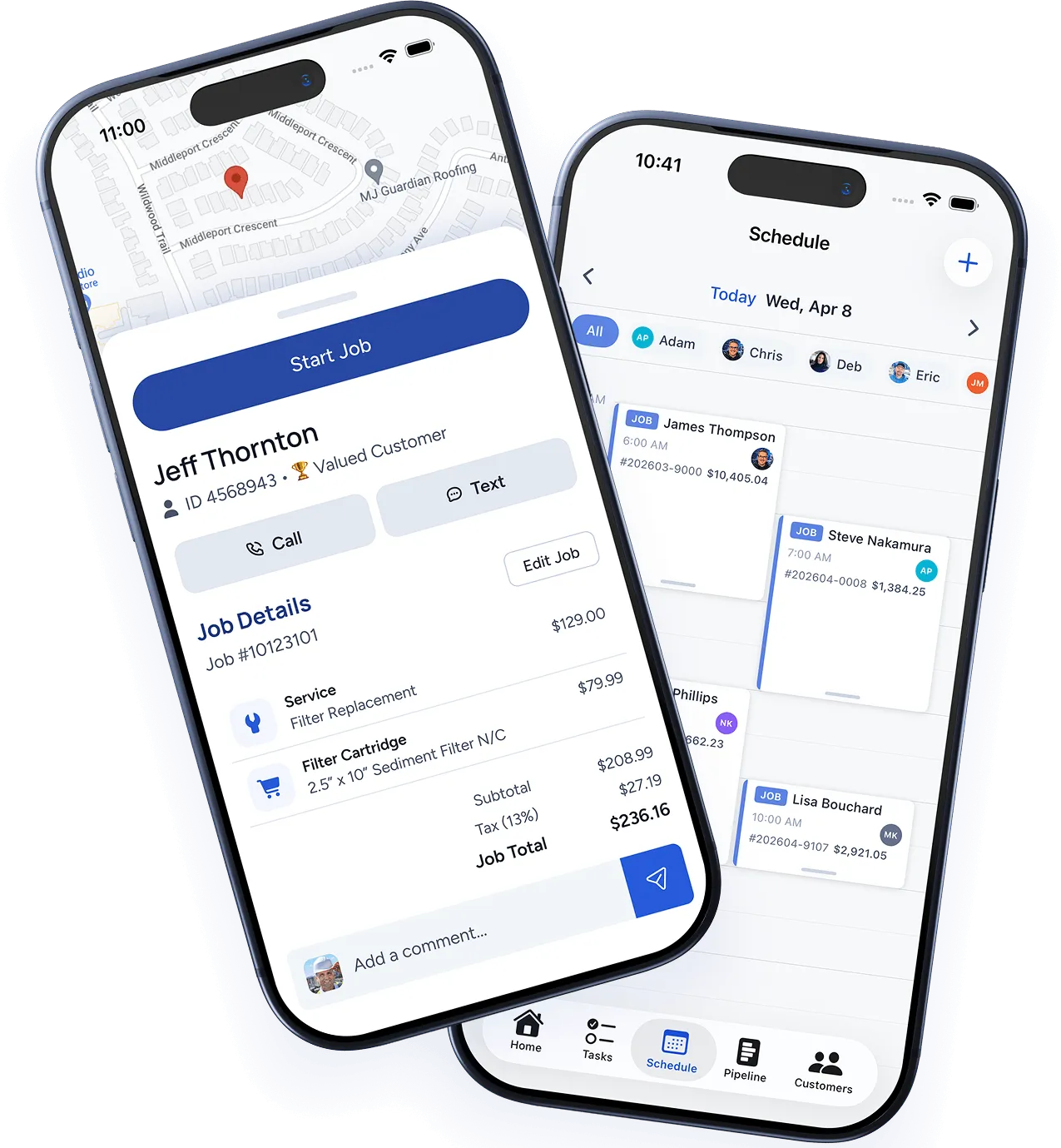
The fix: Invoice the same day. If you’re using software that lets your techs generate invoices on-site, do it before they leave the driveway. If not, block 15 minutes at the end of every day to send that day’s invoices — no exceptions.
Mistake 2: Vague Line Items
“Plumbing repair — $450” might make sense to you, but to the customer it looks like a number you pulled out of thin air. Vague invoices lead to disputes, and disputes lead to delayed payment or write-offs.
Compare that to:
- Diagnosed and repaired leaking supply valve under kitchen sink
- Replaced 3/8” compression valve (part included)
- Tested system, verified no additional leaks
- Labor: 1.5 hours @ $150/hr = $225
- Parts and materials: $225
Same total. Completely different customer experience. The detailed version answers every question before it’s asked.
The fix: Use line items that describe what was done, what parts were used, and how labor was calculated. Your invoicing software should make this easy — if it doesn’t, it’s time to switch.
Mistake 3: Not Matching the Invoice to the Estimate
When a customer approves an estimate for $1,200 and receives an invoice for $1,450, you have a problem. Even if the extra $250 was for legitimate additional work they verbally approved on-site, the disconnect between the two documents creates friction.
That friction turns into a phone call. The phone call turns into a negotiation. The negotiation ends with you eating $100 to “make it right.” Multiply this across a dozen jobs a month and you’re losing serious revenue.
The fix: When scope changes on a job, update the estimate before completing the work. Get written approval — even a text message confirmation works. Then generate the invoice from the updated estimate so the numbers match exactly. The customer sees continuity instead of surprises.
Mistake 4: No Follow-Up System for Unpaid Invoices
Most trade business owners handle collections the same way: check the bank account, notice someone hasn’t paid, maybe send a reminder, probably forget about it for another two weeks.
The average small service business has 15–20% of revenue sitting in unpaid invoices at any given time. For a company doing $500,000 a year, that’s $75,000–$100,000 in cash that should be in your account.
The fix: Automate your follow-up. Set up a system that sends reminders automatically:
- Day 1: Invoice sent with payment link
- Day 3: Friendly reminder if unpaid
- Day 7: Second reminder with slightly firmer language
- Day 14: Phone call or personal email
- Day 30: Final notice before escalation
Most customers who don’t pay aren’t trying to stiff you — they forgot, lost the email, or got busy. A simple reminder solves 80% of late payments without any awkward conversations.
Mistake 5: Making It Hard to Pay
You’d be amazed how many trade businesses send invoices with no payment link, no online payment option, and instructions that amount to “mail a check to this address.”
Every obstacle between the customer and paying you is money left on the table. If they have to find a checkbook, write a check, find an envelope, buy a stamp, and walk to a mailbox — a percentage of them simply won’t do it this week. Or next week.
The fix: Offer digital payment options directly on the invoice. Credit card, ACH, Apple Pay — the more options, the better. Yes, card processing has fees (typically 2.5–3%). But getting paid in 24 hours with a 3% fee beats getting paid in 45 days (or never) with no fee.
The best-performing trade businesses report that adding online payments to invoices reduces average collection time from 23 days to under 5.
The Compound Effect
None of these mistakes will bankrupt you overnight. That’s what makes them dangerous — they’re small enough to ignore, consistent enough to compound. Fix all five and you’ll see the difference in your bank account within 60 days.
Invoice the same day. Be specific about what you did. Match your estimates. Follow up automatically. Make it easy to pay. That’s the entire playbook for getting paid faster, and none of it requires working harder — just working smarter.