
A homeowner’s water heater dies on a Tuesday morning. They call three plumbers. The first sends an estimate by lunch. The second sends one Wednesday. The third says they’ll “get to it by end of week.”
Who gets the job? It’s not even close.
In field service, speed of estimate is the single biggest factor in conversion — ahead of price, ahead of reviews, ahead of brand recognition. The first professional, detailed estimate a customer receives wins the job 60–70% of the time.
Here’s how to be that first responder, every time.
Why Speed Matters More Than You Think
When a customer has a problem, they’re not shopping — they’re solving. They don’t want to compare five options. They want one good option, fast, so they can stop thinking about it.
Every hour your estimate sits unsent, the customer is getting more anxious, more likely to call someone else, and less emotionally connected to you as their solution. Research across the home services industry shows that response time is the number one predictor of estimate-to-job conversion, outweighing price differences of up to 15%.
Read that again: customers will pay 15% more for the company that responds first. Speed isn’t just convenient — it’s profitable.
Build an Estimate Template Library
You shouldn’t be writing estimates from scratch. If you’ve been in business more than a year, 80% of your estimates are variations on the same 20–30 jobs.
Create templates for every common job type:
- Standard scope description that can be customized per job
- Pre-loaded line items with current material prices
- Labor estimates based on your historical average for that job type
- Terms and conditions built into the footer
- Professional formatting with your logo and contact info
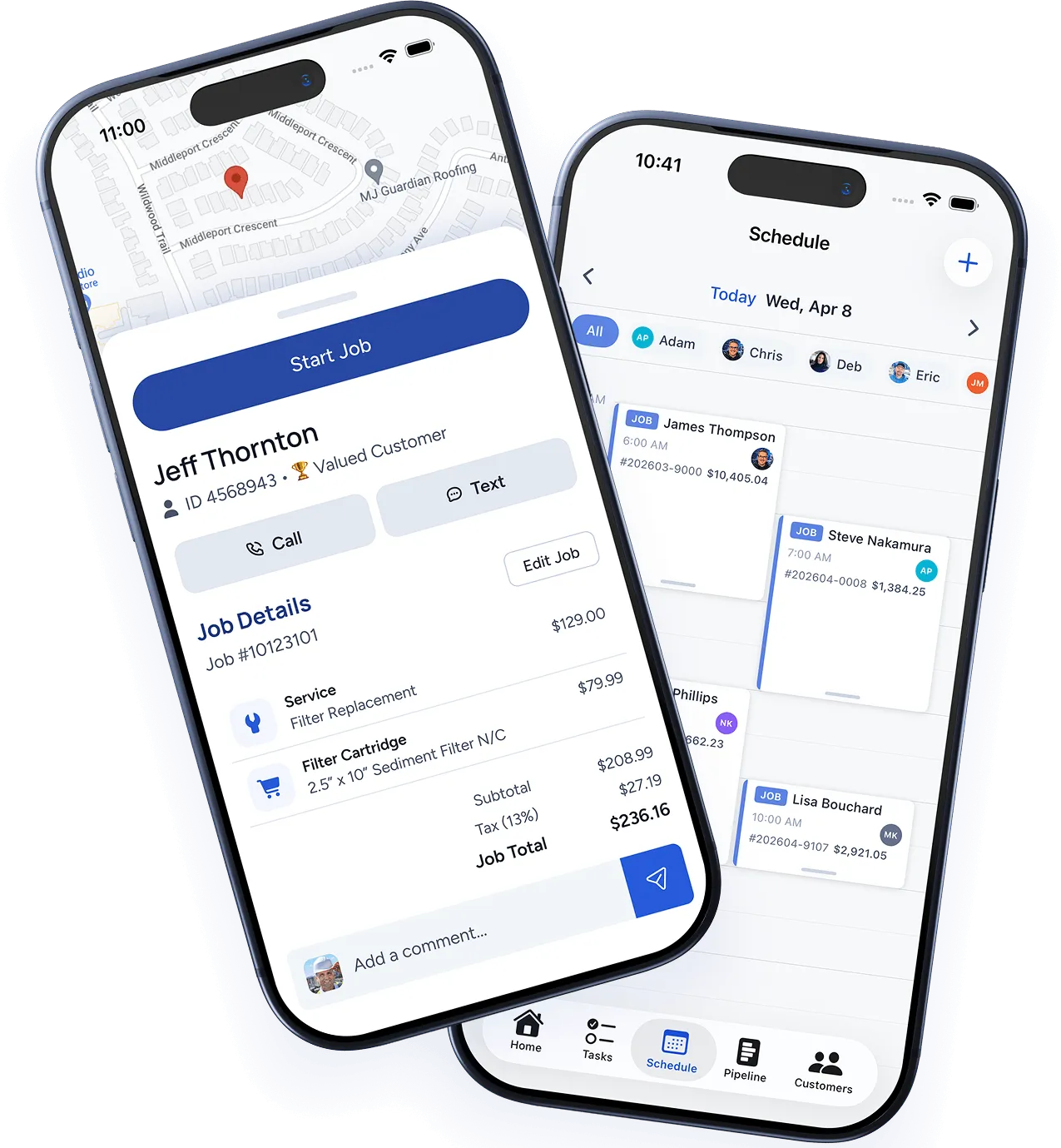
With templates, creating an estimate goes from 30 minutes of typing to 5 minutes of customizing. Your techs can generate them on-site, from the truck, or between calls.
Enable On-Site Estimates
The gold standard is walking out of a diagnostic call with an approved estimate in hand. The customer doesn’t have to wait, you don’t have to follow up, and the job gets scheduled immediately.
For this to work, your techs need three things:
- Mobile access to your price book — they need to look up parts and labor rates without calling the office
- Estimate templates on their phone or tablet — pre-built templates they can fill in on-site
- Digital approval — let customers sign on the screen instead of waiting for a printed document
On-site estimate approval rates are dramatically higher than emailed estimates. When the customer can see the number and say yes in the moment, you skip the entire follow-up cycle.
The Anatomy of a Winning Estimate
Fast isn’t enough if the estimate looks unprofessional. A sloppy estimate — no matter how quick — signals sloppy work. Here’s what every estimate should include:
Header
- Your company name, logo, license number, and contact info
- Customer name and service address
- Date and estimate number
Scope of Work
- Clear, plain-language description of what you’ll do
- Specific enough that the customer understands the work
- Include what’s NOT included to prevent scope creep
Line Items
- Labor broken out by task or flat-rate per job
- Materials listed individually with quantities
- Permits or inspection fees if applicable
- Sales tax
Total and Options
- Clear total at the bottom
- If applicable, a “good/better/best” option to give the customer choice
- Payment terms
Footer
- Estimate validity period (30 days is standard)
- Your warranty terms
- A clear call-to-action: “Approve this estimate to schedule your service”
The Good/Better/Best Strategy
Offering three options on an estimate increases your average ticket size by 20–35%. Here’s why: when you present a single price, the customer’s only decision is yes or no. When you present three options, the decision shifts to which one.
Good: The minimum scope — fixes the immediate problem Better: The smart choice — fixes the problem plus addresses a related issue Best: The premium option — comprehensive solution with extended warranty
Most customers choose the middle option. Some choose the top. Almost nobody picks the bottom. You’ve just increased your average job value without any additional sales effort.
Follow Up Fast When They Don’t Approve Immediately
Not every estimate gets approved on the spot. That’s fine — but your follow-up speed matters just as much as your initial response speed.
Set up a follow-up sequence:
- 2 hours after sending: Quick text or email — “Hi [name], just wanted to make sure you received the estimate. Happy to answer any questions.”
- 24 hours: Phone call if no response. Keep it brief and helpful, not pushy.
- 3 days: Second email with a gentle nudge. Mention scheduling availability.
- 7 days: Final follow-up. Let them know the estimate is still valid and you’re here when they’re ready.
Most businesses never follow up at all. Simply having a system puts you ahead of 90% of your competition.
Measure Your Estimate Pipeline
Track these numbers weekly:
- Estimates sent — Volume of opportunity
- Average time from request to estimate sent — Your speed metric (target: under 4 hours)
- Estimate-to-job conversion rate — Target: 50%+ for residential, 40%+ for commercial
- Average estimate value — Is it trending up or down?
- Follow-up response rate — Which follow-up touchpoint drives the most approvals?
These five numbers tell you exactly how healthy your sales pipeline is. If conversion drops, you can diagnose whether it’s a speed problem, a pricing problem, or a follow-up problem.
Speed Is a Competitive Advantage
In a world where most trade businesses take 2–3 days to send an estimate, being the one who responds in 2–3 hours is a superpower. It doesn’t require working harder — it requires having the right templates, the right tools, and the right habits.
Be first. Be professional. Follow up. That’s how you win more jobs without spending a dime more on marketing.